A singles-driven label
A new single every two weeks, each with the same tasks and deadlines set from release day. The calendar shows what comes out next and what is running late.

Cover, masters, metadata, splits, contract, pitch: a single goes through dozens of steps before it reaches the stores. LabelBase's release planning software keeps them on the release itself, dated from release day, so nothing is forgotten the week before.
100+ releases managed monthly
Trusted by independent labels and modern music teams










Without release planning software, a single's cover sits in a Dropbox folder, the masters in a WeTransfer link, the splits in a spreadsheet, the contract in someone's inbox and the to-do list on a Notion board. Each piece lives somewhere else, and the one that was forgotten shows up the week before release day.
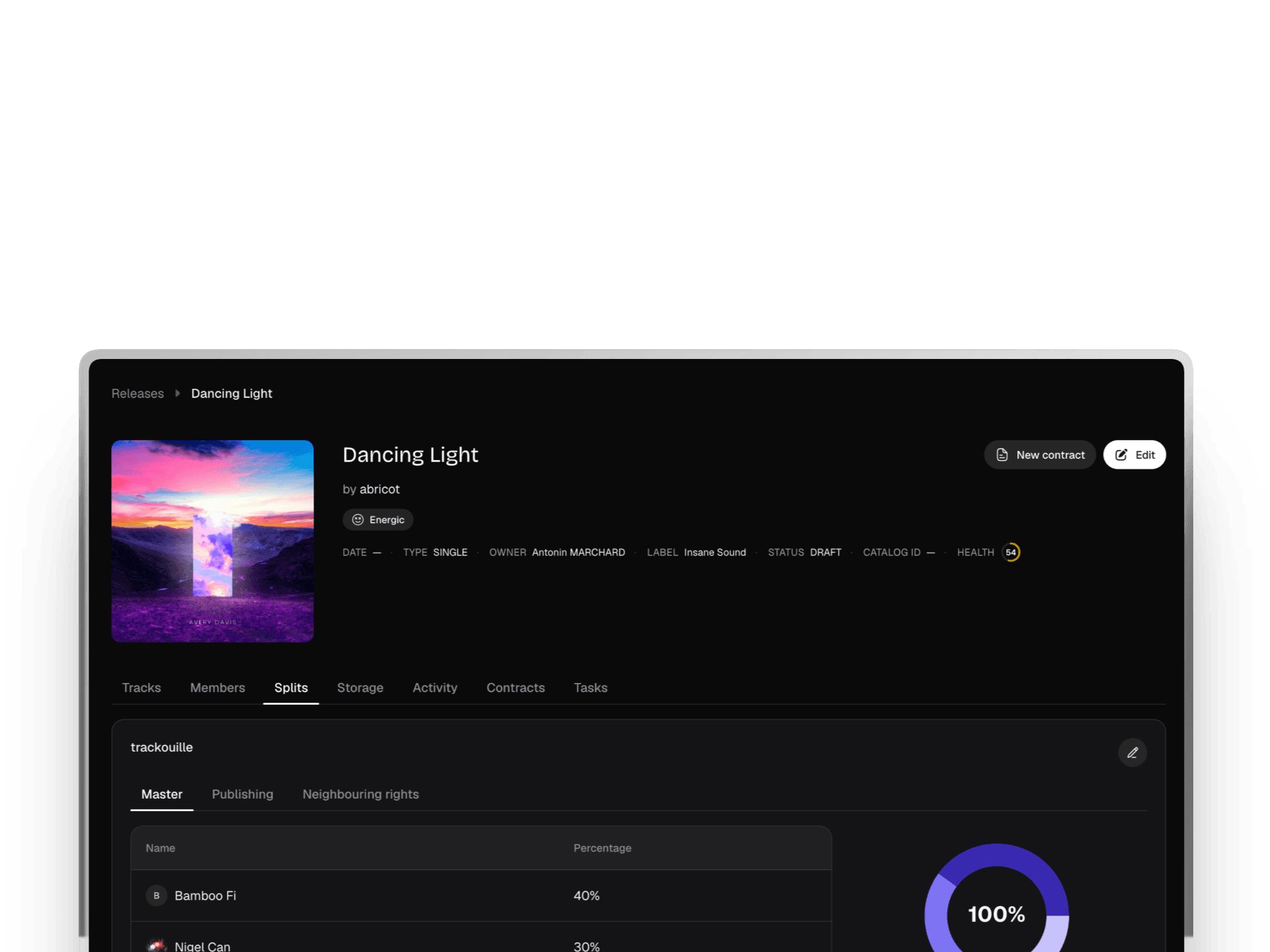
In LabelBase, each release carries its own release plan: its tasks dated from release day, its metadata checked, its files, splits and contract in one place.
Create the release, set the date, and LabelBase lays out the work. Everyone sees what is due, who owns it and what is late.
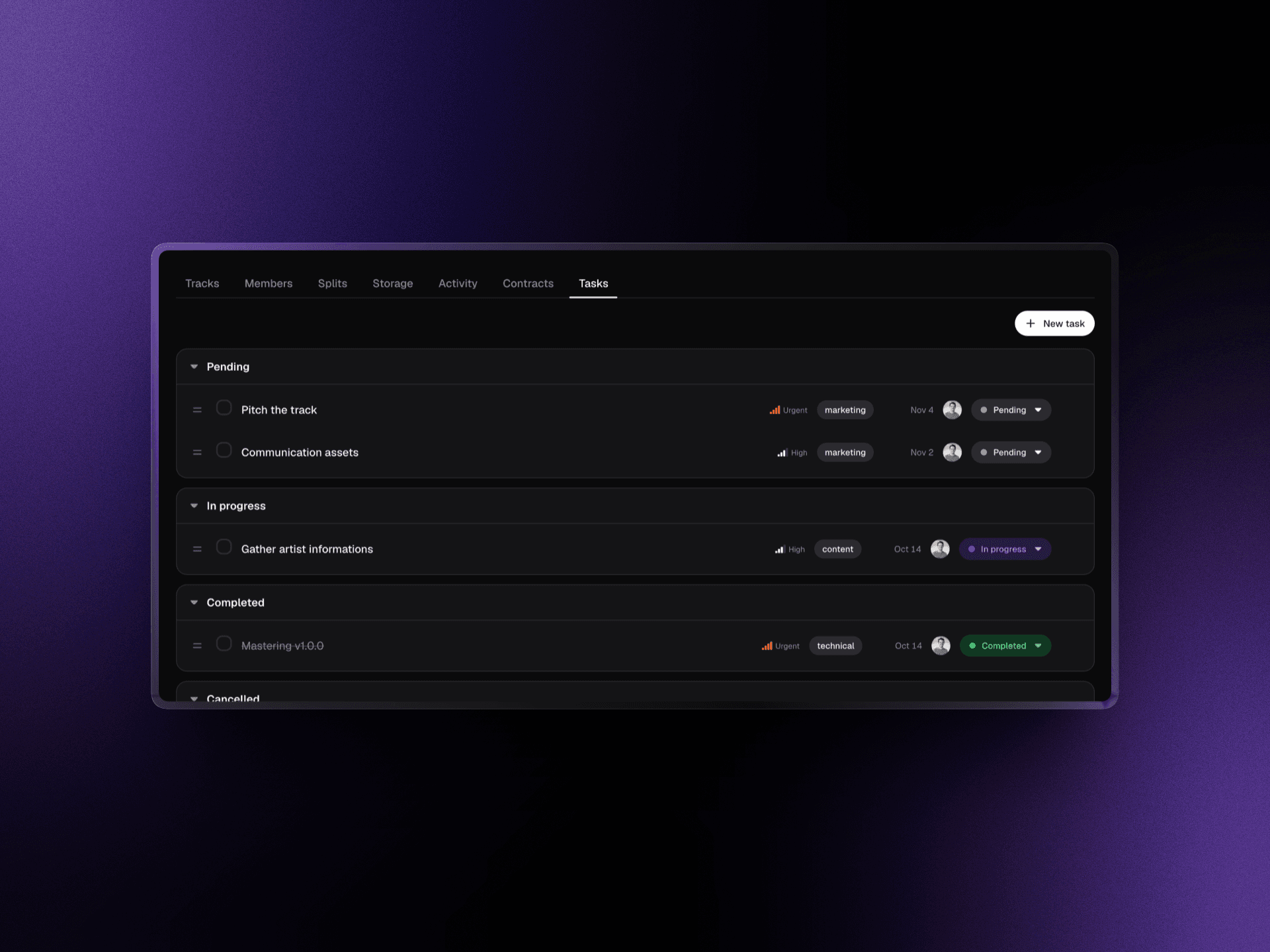
Every release starts with the tasks most labels forget: add the cover, find the release date, upload the tracks, set the splits, sign the contract, send the pitch. Add your own, set a priority and assign each one to a team member.
Due dates can follow the release date, for example the pitch four weeks before and the cover two weeks before. Move the release and the deadlines move with it.
See all your releases on a calendar, and save the views your team uses most: this month's singles, one artist's releases, everything still in draft.
A release that leaves the label with a missing ISRC comes back as a problem. LabelBase checks it before it leaves.
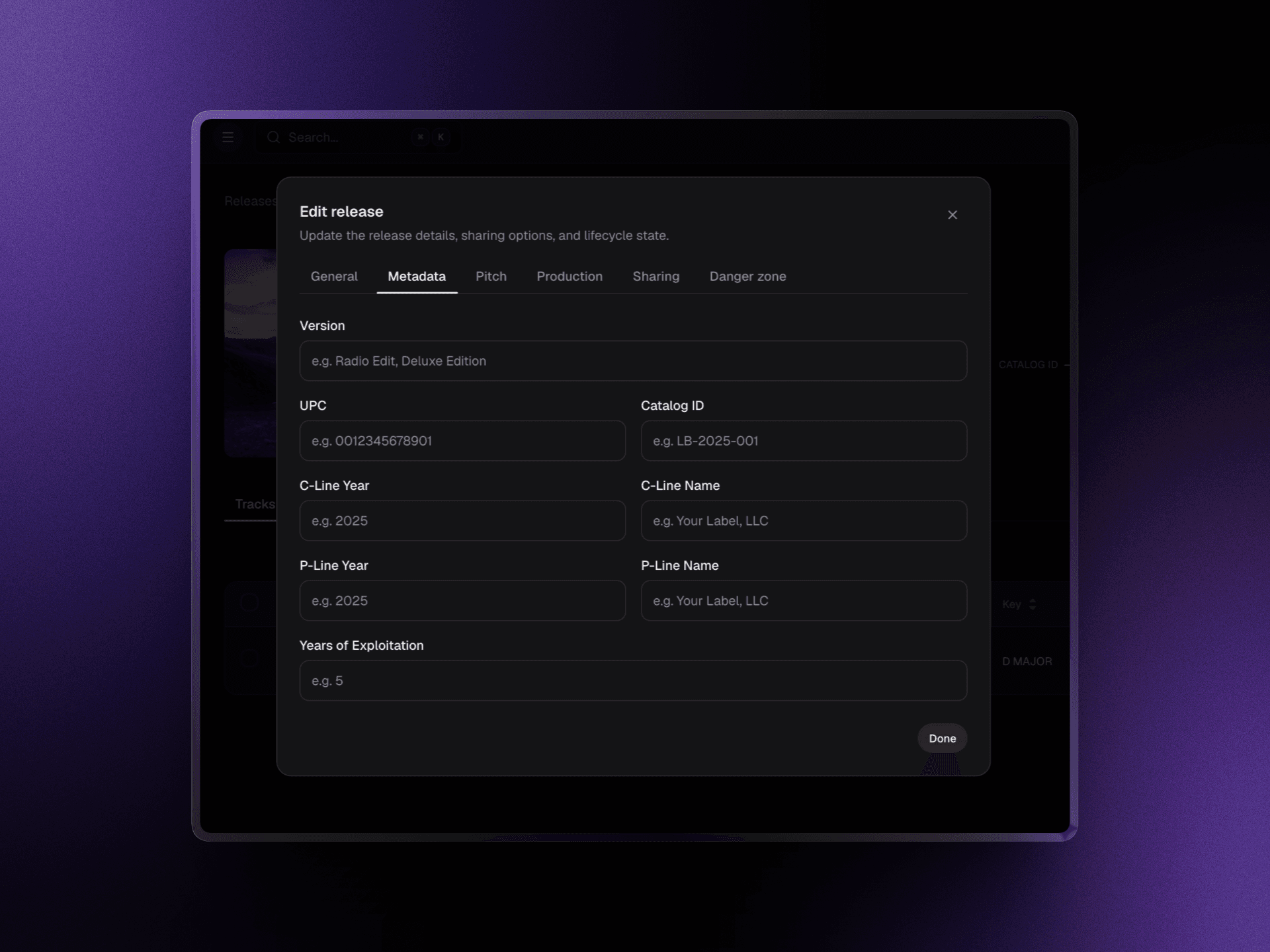
UPC, catalog number, release type, P-line and C-line, genre, mood, cover and pitch on the release; ISRC, credits and writers on each track. Catalog numbers and ISRCs can be generated from your label's own prefix.
LabelBase flags what is missing: an ISRC, a master, the main artist, the writers, a genre, the UPC, the cover, the P and C lines, or a contract still unsigned.
Set each collaborator's master, publishing and neighbouring rights split on every track. Royalties are computed from the master splits, so there is no second spreadsheet at payout time.
The artist, the producer and the manager all have something to send or to sign. They do it on the release.
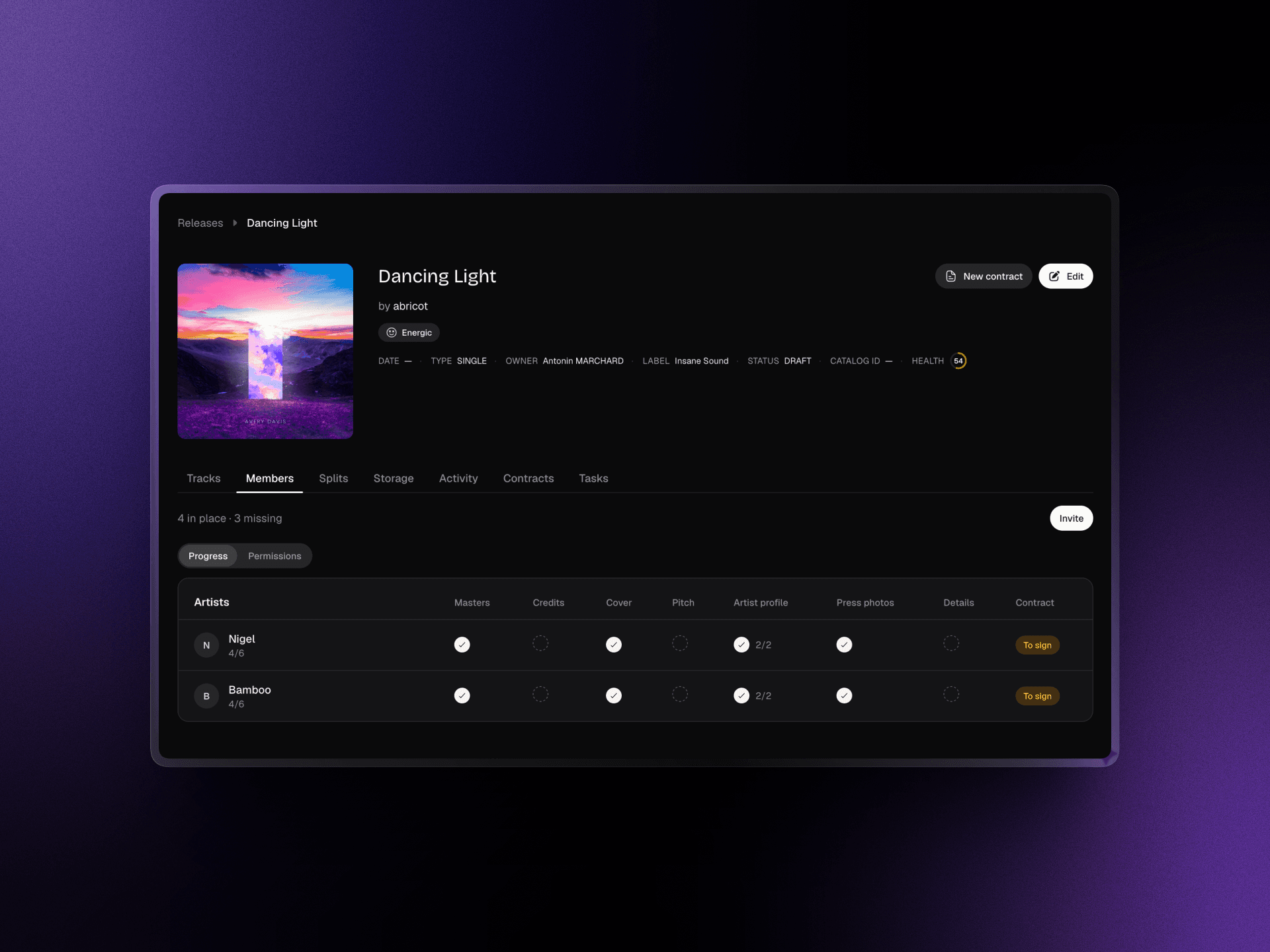
Send one link and the artist drops the tracks, the cover, the pitch, their bio and their press photos. You choose what the link asks for and when it expires, and you can revoke it at any time.
Each member of the release gets their own intake to send masters, credits or an EPK, opened with a one-time code, with reminders and their progress shown on the release.
Generate a licence or split agreement from your templates, pre-filled with the release's tracks, ISRCs and splits, then send it for e-signature.
“LabelBase is a must-have for your label: every useful tool gathered in one place. The visual pipeline changed how we ship releases.”
MikeDirector, Bougie RecordsShow us your spreadsheet or your board in a short call. We'll walk you through the same release in LabelBase, from the first draft to release day.
A new single every two weeks, each with the same tasks and deadlines set from release day. The calendar shows what comes out next and what is running late.
The lead singles, the album and its remixes linked as parent and child releases, with the artist's photos and pitch collected once through the upload link.
Physical formats are kept on the release with their stock and sales, next to the digital release and its metadata.
Yes. Each release carries its tasks, deadlines, metadata, splits, files and contract, and the calendar shows every release of the label. Send your existing catalog as a CSV export and the LabelBase team imports it for you.
Through an upload link you send them, or through the intake of each collaborator, opened with a one-time code. Files land on the right release.
No, LabelBase is not a distributor. You keep delivering through your distributor; LabelBase prepares the release, its metadata and its files, then imports your distributor's royalty statements.
Missing ISRCs, masters, main artist, writers, genre, UPC, cover and P and C lines, and contracts that are not signed yet. Each gap is listed on the release so you can fix it before release day.
Yes. One workspace can hold several labels or sub-labels, each with its own releases, run by the same team.
Without LabelBase
With LabelBase
The to-do list lives on a board nobody keeps up to date.
Every release starts with its tasks, owners and due dates.
Release day moves, and every deadline is redone by hand.
Move the release date and the deadlines follow.
The missing ISRC is spotted by the distributor.
The health score flags it before the release leaves the label.
Masters and the cover arrive in five different email threads.
Artists drop their files through one upload link on the release.
A short call with the team behind LabelBase: we look at how you plan releases today and show you the release plan that replaces it.