Answering a brief
A supervisor asks for an upbeat track around 120 BPM in a minor key. Two filters later, a playlist link is on its way.

A supervisor's brief needs an answer today, not after a search through Dropbox folders. LabelBase tags your catalog with AI, finds the right track in a few filters and shares it as a playlist link.
Trusted by independent labels and modern music teams











A music supervisor asks for something upbeat, around 120 BPM, in a minor key. The masters are on Dropbox, the metadata in a spreadsheet, the moods in someone's head, and the private SoundCloud links from the last pitch have expired. By the time the playlist is ready, the brief has gone to someone else.
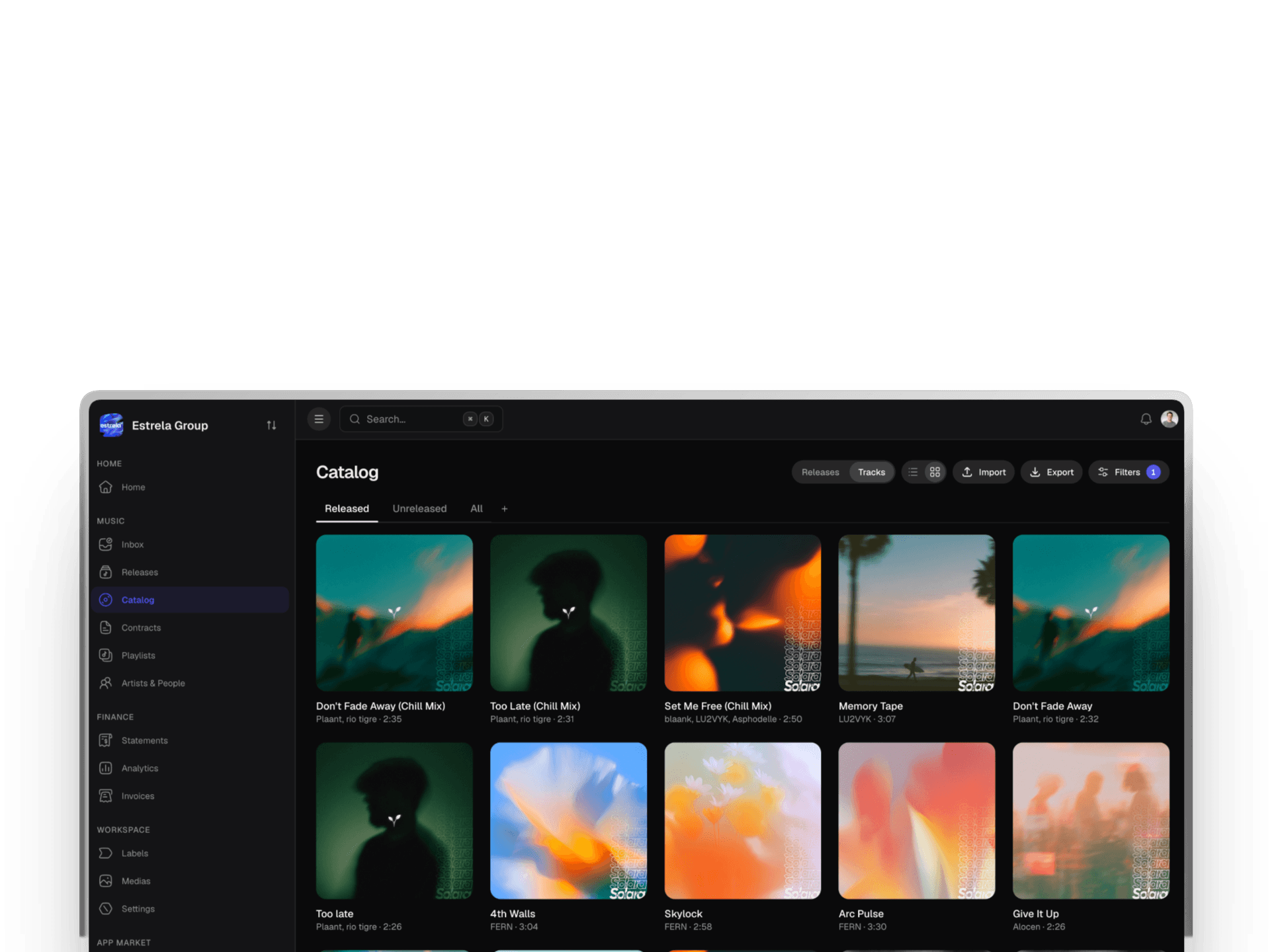
LabelBase turns your catalog into something you can pitch from: every track tagged, searchable by how it sounds, and shared as a playlist in one link.
When a track lands in LabelBase, an audio model listens to it, so nobody has to type its musical metadata by hand.
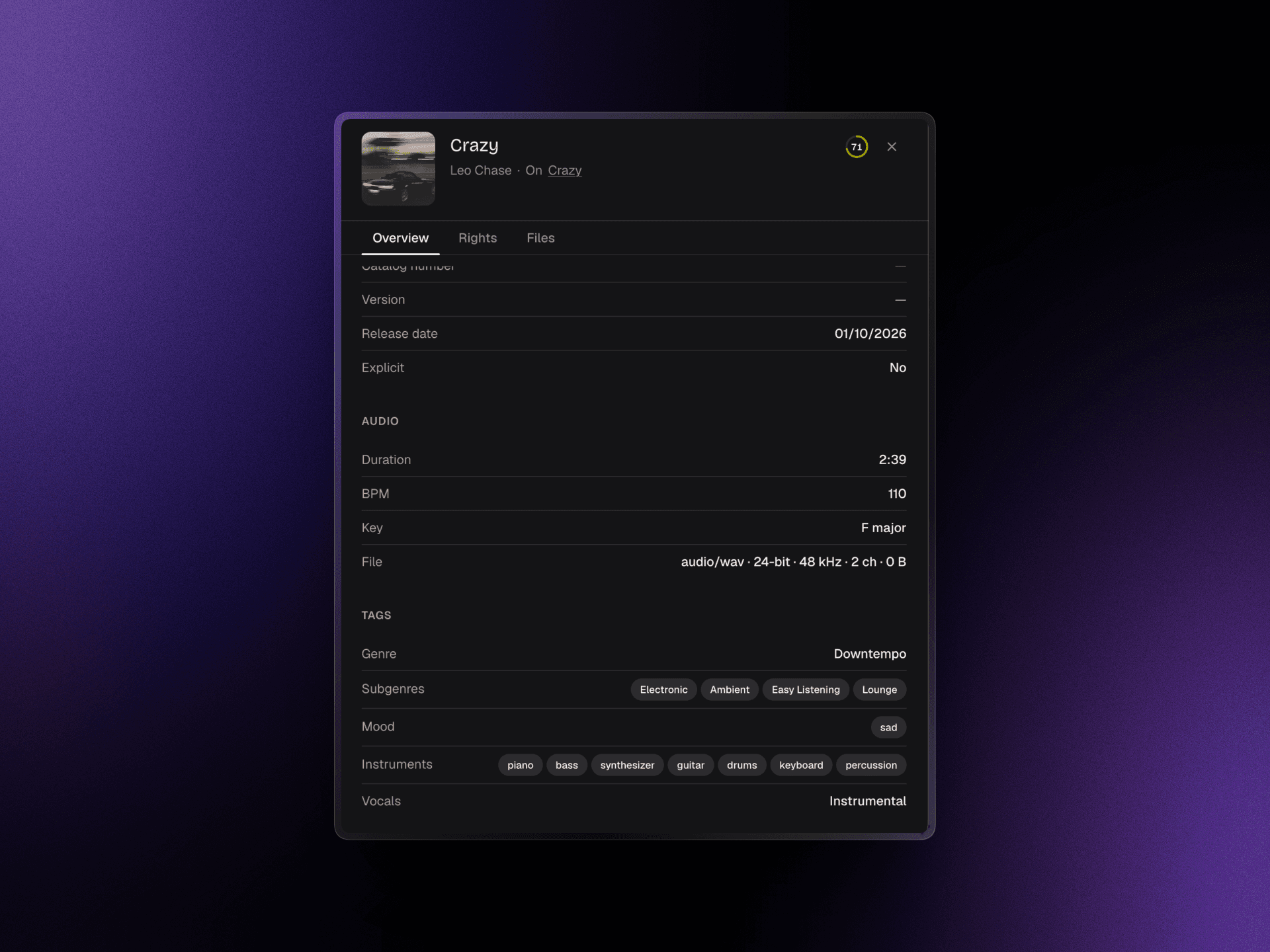
Each track gets a genre and its subgenres, the moods it carries, the instruments detected and whether it has vocals.
Tempo and key are measured along with energy and loudness, so the catalog can be searched by how it sounds.
Pin your label's own genres and they take precedence over the model's. Every tag stays editable.
Answer a brief by combining what it asks for, not by scrolling through a folder.
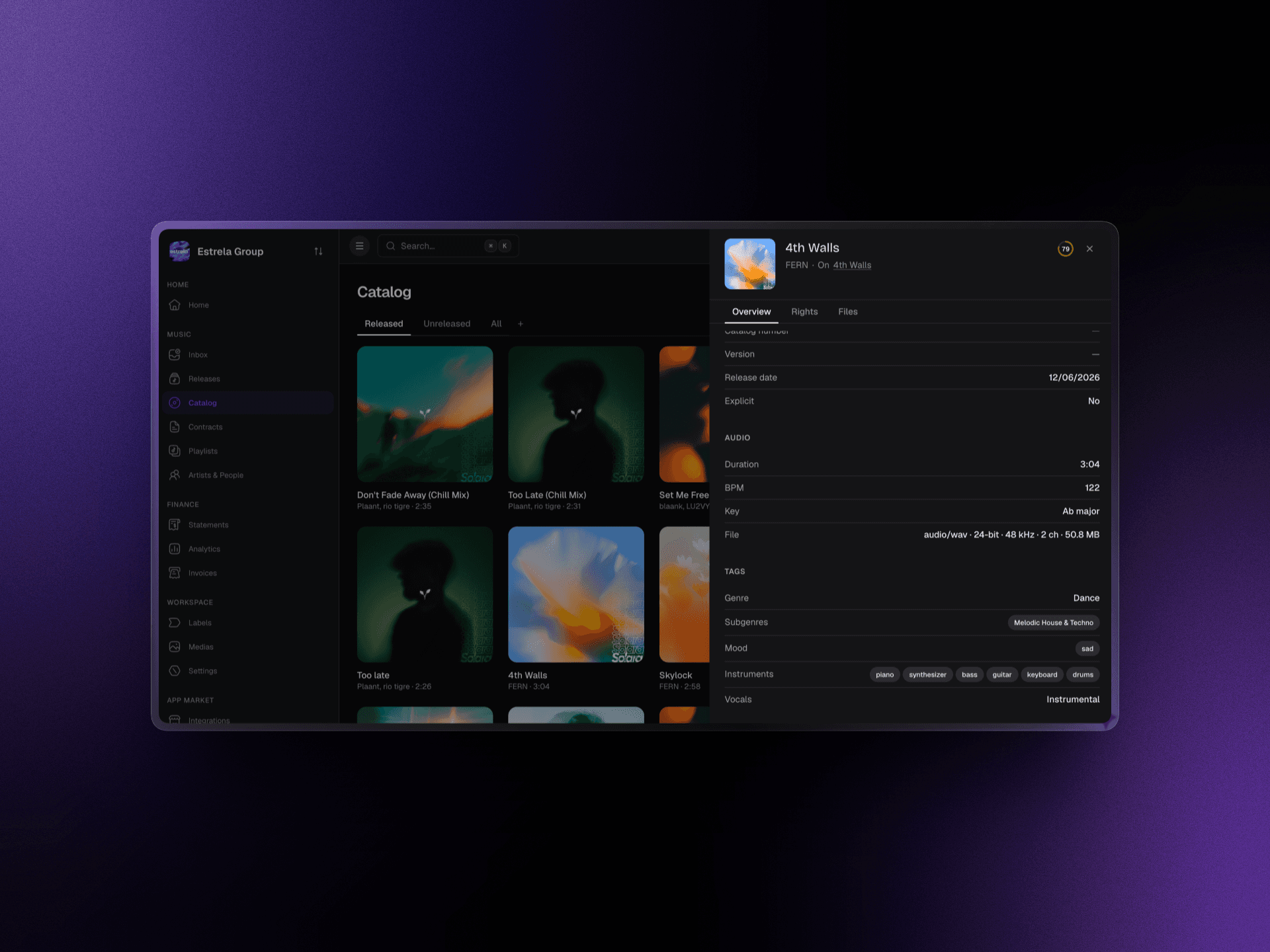
Combine mood, genre, key, BPM range, instruments, label, ISRC or catalog number to narrow the catalog down.
Credits, writers, ISRC and the master and publishing splits are kept on each track, ready when a supervisor asks.
Tracks keep their audio in LabelBase, or point to a master hosted elsewhere through an external URL.
Build a playlist for every brief and send a page that does the music justice.
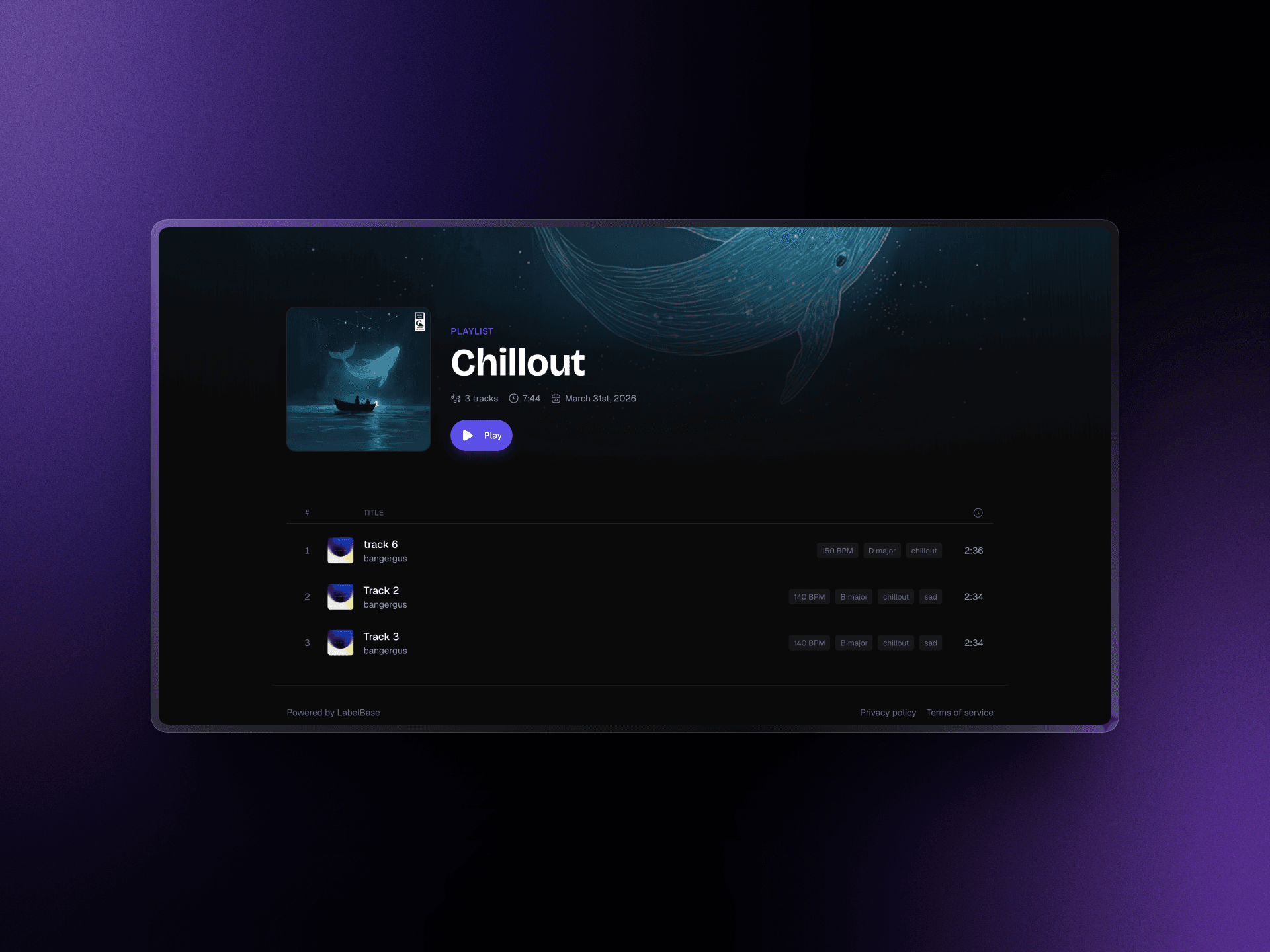
Drag in as many tracks as you need, reorder them, and keep each playlist tied to the brief it answers.
Each playlist gets its own page with artwork and playback. Send one link to supervisors, partners or A&R, with no login.
Make the playlist viewable by anyone with the link, and choose whether its tracks can be downloaded.
“LabelBase replaces multiple paid tools and eliminates the manual tracking that wastes our time. We save several hours every week.”
LudovicManager, Estrela RecordsShow us in a short call. We'll show you the same brief answered from your catalog in LabelBase, playlist link included.
A supervisor asks for an upbeat track around 120 BPM in a minor key. Two filters later, a playlist link is on its way.
The label keeps a playlist per mood or per client, and adds new releases to it once they're tagged.
The same playlists are a quick way to share musical references with an artist before a session.
No. Each playlist gets a public page: send the link and anyone who has it can listen, with no login.
Only if you allow it. Each playlist has its own download setting.
An audio model analyses each track on upload: genre and subgenres, moods, instruments, vocals, BPM, key, energy and loudness. Your own genres take precedence and every tag stays editable.
No. The audio analysis runs on LabelBase's own servers and your audio files are never sent to a third party.
Without LabelBase
With LabelBase
Moods and tempos are guessed from memory.
Every track is tagged by AI with its genre, mood, BPM and key.
Finding a track means opening folder after folder.
Filter the catalog by mood, key, BPM, instruments and more.
The pitch is a WeTransfer link and a list in an email.
A playlist page with artwork and playback, in one link.
The supervisor asks who wrote the track, and nobody knows.
Credits, writers, ISRC and splits sit on every track.
A short call with the team behind LabelBase: we look at how you pitch today and show you your catalog, tagged and ready to share.